
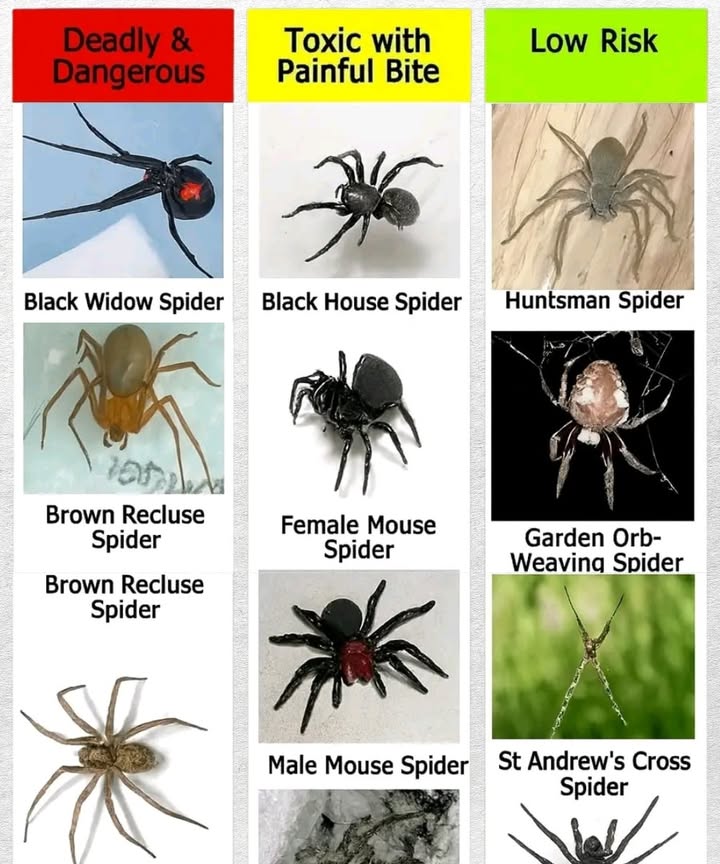
Common Spiders Found in the United States
Black Widow: Highly venomous, recognizable by its glossy black body and the red hourglass shape on its abdomen. Its bite can be life-threatening.
Brown Recluse: Considered dangerous; its bite may lead to severe tissue damage.
Hobo Spider: Has a toxic bite that causes pain, though fatalities are extremely rare.
Black House Spider: Produces strong venom that can result in sharp pain.
Mouse Spiders both sexes: Their bites are painful but seldom pose a serious risk to humans.
Wolf Spider: Large and quick-moving; its bite may cause mild irritation but is not medically significant.
Huntsman Spider: Non-dangerous to people and helpful in reducing insect populations.
Garden Orb-Weaver: Known for weaving large webs; poses no threat to humans.
St. Andrews Cross Spider: Easy to identify by the distinctive cross-shaped position it adopts in its web.
Trapdoor Spider: Resides in burrows and generally harmless to humans.

Hi there — I’m Ava, the creator behind Ava Garden Tips 🌿
I’ve always been passionate about plants, flowers, and the simple joy that comes from growing something beautiful. What started as a small balcony garden has turned into a love for helping others create their own green spaces — no matter how big or small.