
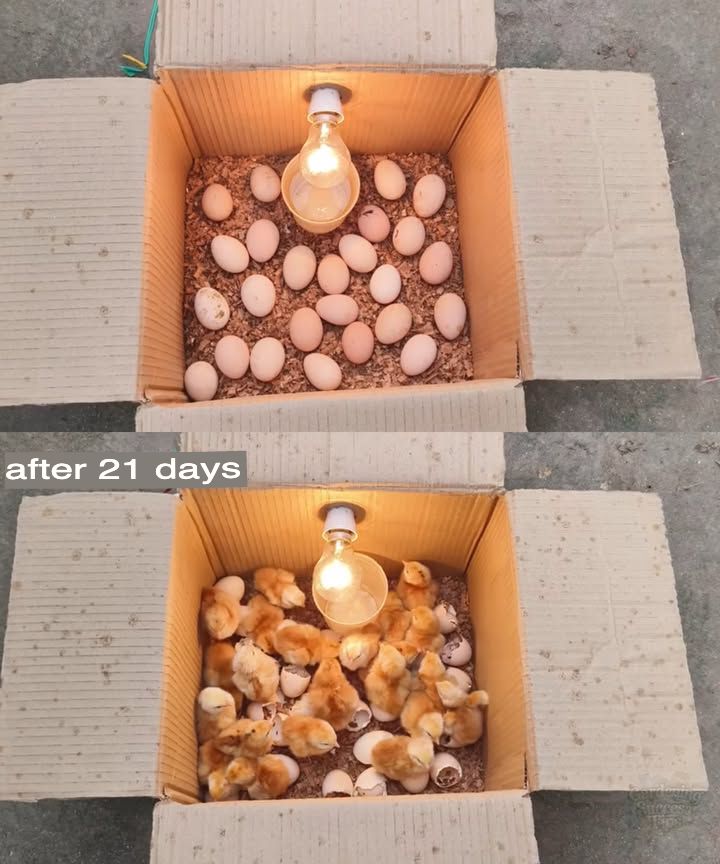
Discover how to create a simple home incubator for chicken eggs!
Necessary materials:
A sturdy cardboard box
A light bulb with socket and electrical cord
A thermometer and hygrometer
Sawdust or shredded paper for bedding
A water container for humidity
Fertilized eggs
Manufacturing steps:
1. Prepare the box
Take a cardboard box large enough to hold the eggs. Add a layer of sawdust or paper for good thermal retention.
2. Install the heat source
Attach an incandescent bulb to the center of the lid or on one side of the box. It will help maintain a constant temperature.
3. Monitor temperature and humidity
Place a thermometer and hygrometer inside. The ideal temperature is about 99.5F, and humidity should be between 50 and 60%. Add a water container to maintain humidity.
4. Place the eggs
Put the fertilized eggs in the box, spaced apart for good air circulation.
5. Turn the eggs regularly
Gently turn the eggs 2 to 3 times a day to prevent the embryo from sticking to the shell.
6. Monitor and adjust
Check the temperature and humidity daily. Adjust the height of the bulb if necessary.
7. Hatching after 21 days
Around day 18, stop turning the eggs and slightly increase humidity 65-70% to facilitate hatching. After 21 days, the chicks should start to hatch!
This simple method allows you to incubate eggs economically at home!

Hi there — I’m Ava, the creator behind Ava Garden Tips 🌿
I’ve always been passionate about plants, flowers, and the simple joy that comes from growing something beautiful. What started as a small balcony garden has turned into a love for helping others create their own green spaces — no matter how big or small.