
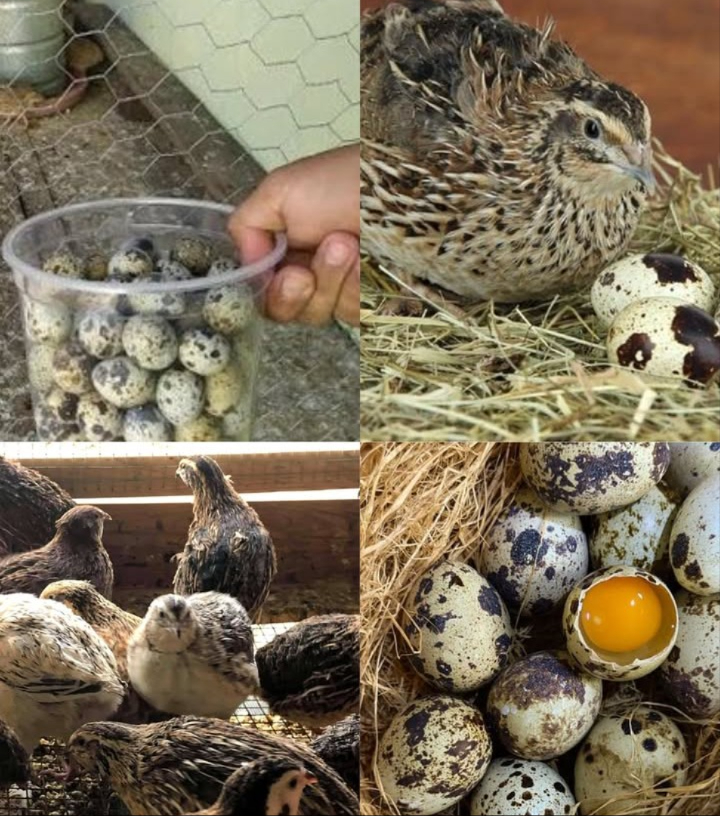
Guide and tips for raising quails and obtaining eggs
1. Advantages of raising quails
o They take up less space and consume less feed than chickens.
o They are highly productive, laying up to 300 eggs per year.
o Eggs are a prized delicacy in several countries.
2. Basic requirements
o Minimum space of 1 m per bird to avoid overcrowding.
o Closed cages with a waterproof roof to protect them from escapes and humidity.
o High-protein feed 20%: commercial feed, boiled rice, fruits and vegetables.
o Calcium supplement with eggshells or crushed shells.
o Lighting of 14-16 hours a day, natural or artificial.
3. Necessary care
o Keep cages clean and dry to prevent disease.
o Provide nest boxes with hay or wood shavings for comfort.
o Ensure a safe environment, with air flow and noise insulation.
o Watch for signs of stress or illness such as lethargy or ruffled feathers.
4. Recommended Breeds
o Japanese Quail: High egg productivity.
o Button Quail: Lower productivity, but easy to handle.
5. Egg Production
o Begin laying at 6-8 weeks of age.
o Lay 150-300 eggs per year.
o Production declines after 9 months.
6. Additional Considerations
o Limit food and water space to prevent fighting.
o Collect eggs daily to maintain cleanliness and prevent damage.
o Up to 6 quail can be raised in one hens space.

Hi there — I’m Ava, the creator behind Ava Garden Tips 🌿
I’ve always been passionate about plants, flowers, and the simple joy that comes from growing something beautiful. What started as a small balcony garden has turned into a love for helping others create their own green spaces — no matter how big or small.