
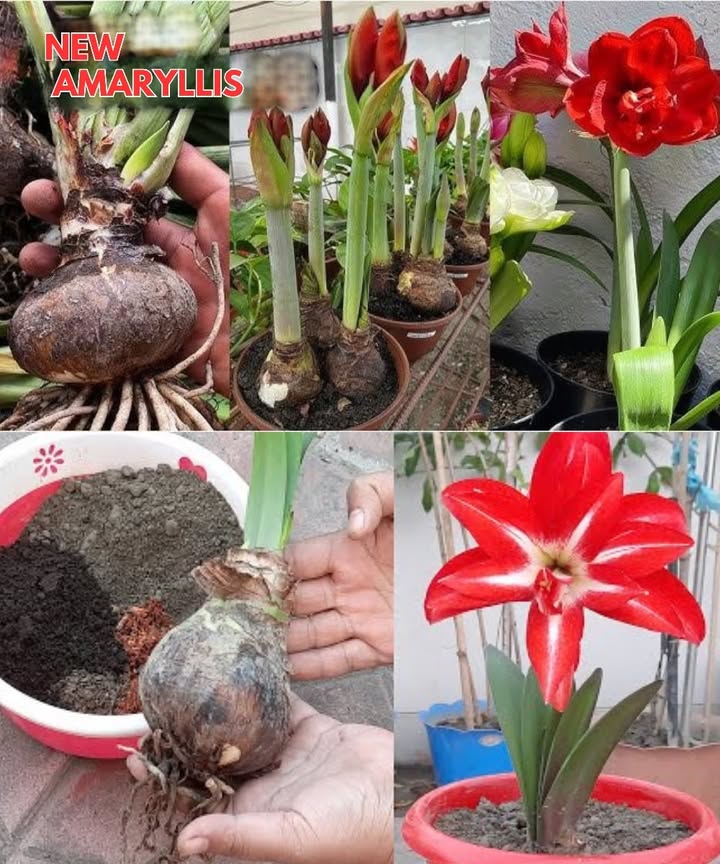
How to Grow Amaryllis and Encourage Reblooming
Materials and basic care:
1. Soil and watering: use a well-draining, medium-textured soil. Add sand if needed to support mature plants. Water only when the soil surface is dry. Place the plant in a sunny, well-drained location.
2. Soil preparation: amaryllis prefers direct or partial sunlight and soil with good drainage, pH between 6.0 and 6.8. If the soil is sandy, add well-decomposed compost.
3. Bulb selection: large bulbs flower sooner, while smaller ones take longer. They can be grown both indoors and in the garden.
4. Flowering period: blooming usually occurs between March and June. Keep the top 5 cm of soil slightly moist but avoid waterlogging.
5. Fertilization: apply slow-release organic fertilizer in autumn, after flowering, and before new leaves appear.
Pruning and additional care:
1. Pruning: once flowering is over, cut back the flower heads and stems. Remove dead leaves at the end of spring.
2. Pests and diseases: slugs and snails are the most common pests. Use iron-based pellets to protect the plants. In humid conditions, apply a copper fungicide to prevent leaf damage.
Propagation and reblooming:
1. Propagation: divide the bulbs in late spring or early summer when the leaves are completely dry. Replant them immediately.
2. Reblooming: allow bulbs to rest for 1012 weeks in a cool, dry place. After dormancy, replant them in fresh soil and place them in a sunny spot.

Hi there — I’m Ava, the creator behind Ava Garden Tips 🌿
I’ve always been passionate about plants, flowers, and the simple joy that comes from growing something beautiful. What started as a small balcony garden has turned into a love for helping others create their own green spaces — no matter how big or small.