
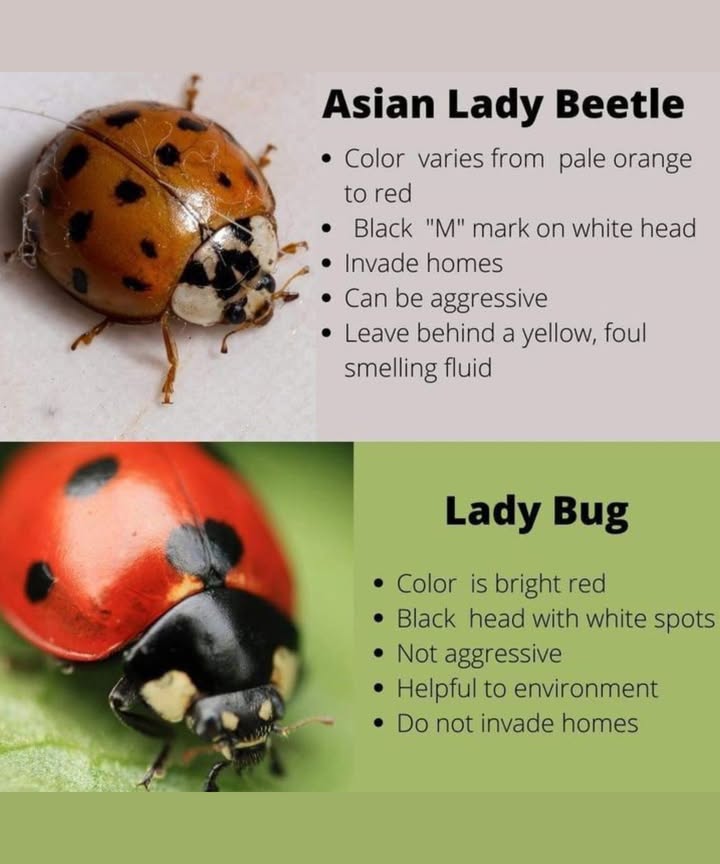
Ladybug vs. Asian Lady Beetle: Whats the Difference?
At first glance, these two beetles look nearly identicalbut dont be fooled! While they may share a similar appearance, they have very different behaviors and impacts on your home and garden.
李 Asian Lady Beetle Harmonia axyridis
Often mistaken for native ladybugs, these invaders can become unwelcome house guests.
Color: Varies from pale orange to red
Head: Distinct black M shape on a white head
Behavior: Can be aggressive and bite
Habits: Invades homes, especially in fall
Odor: Releases a yellow, foul-smelling fluid when disturbed
Environmental Impact: Can outcompete native species
Fun fact: These were introduced to control pests but quickly became a nuisance in some areas.
Ladybug Coccinellidae
Our beloved garden friend, these tiny helpers are a gardeners best ally.
Color: Bright red with black spots
Head: Black with white markings
Behavior: Gentle and non-aggressive
Habits: Stays outdoorsdoes not invade homes
Benefits: Controls aphids and other harmful pests naturally
Environmental Role: Essential for healthy ecosystems
Tip: Attract ladybugs with flowering herbs like dill, fennel, and yarrow!
類 How to Tell Them Apart:
Check the head: An M shape means its likely an Asian lady beetle.
Behavioral clues: Friendly and outdoors? Probably a ladybug. Aggressive and indoors? Likely an invader.
Why It Matters:
Native ladybugs are vital to maintaining a balanced ecosystem. Learning to distinguish them helps support biodiversity and keep your garden thrivingnaturally and safely.

Hi there — I’m Ava, the creator behind Ava Garden Tips 🌿
I’ve always been passionate about plants, flowers, and the simple joy that comes from growing something beautiful. What started as a small balcony garden has turned into a love for helping others create their own green spaces — no matter how big or small.