
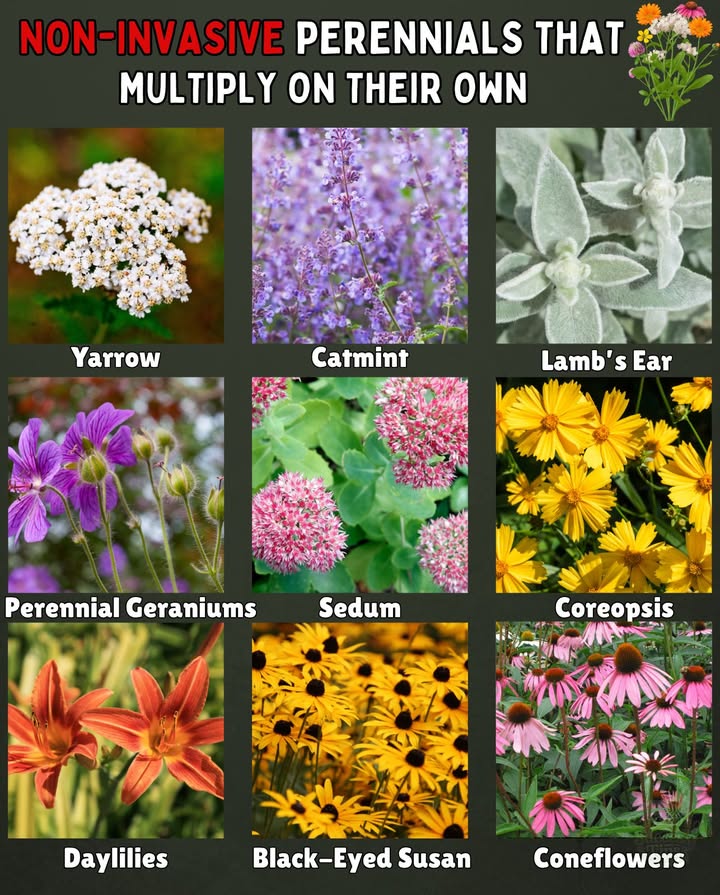
Non-Invasive Perennials That Spread on Their Own
1. Coneflowers Echinacea
Self-seeds moderately but not aggressive
Easy to manage by removing seedlings
2. Black-Eyed Susan Rudbeckia
Spreads by reseeding, but seedlings are easy to pull
Not invasive
3. Daylilies Hemerocallis
Clump-forming, expands gradually
Easy to divide and control
4. Coreopsis
Spreads gently by seed and clumping
Not known as invasive
5. Sedum Stonecrop
Spreads slowly and predictably
Perfect for filling gaps without taking over
6. Perennial Geraniums Cranesbill types
Spread in clumps but dont smother other plants
7. Lambs Ear Stachys byzantina
Can cover ground, but is shallow-rooted and easy to pull back
8. Catmint Nepeta
Grows outward but is easily trimmed and not invasive
9. Yarrow Achillea Note: spreads by rhizomes, so give space
Not officially invasive but can be vigorousbest for large beds or contained areas
Plants to Use Caution or Avoid Invasive Tendencies:
Bee Balm Monarda spreads aggressively by rhizomes
Creeping Jenny Lysimachia very fast spreader
Ajuga can overtake beds
Some Hostas multiply rapidly but are usually easy to control
Lungwort can self-seed heavily in damp shade
Tip:
Even non-invasive spreaders can crowd neighbors over several seasons, so regular dividing and thinning keeps them tidy.

Hi there — I’m Ava, the creator behind Ava Garden Tips 🌿
I’ve always been passionate about plants, flowers, and the simple joy that comes from growing something beautiful. What started as a small balcony garden has turned into a love for helping others create their own green spaces — no matter how big or small.