
Pruning Grapevines the Right Way: Understanding Spur Pruning
For grapevines to stay strong and deliver rich harvests each year, targeted pruning is essential. One of the most effective methods is spur pruning, usually carried out in winter or early spring.
Why prune grapevines?
Without pruning, vines turn into a tangled mess, which leads to:
Weak, overcrowded growth
Many small, poor-quality grapes
Higher risk of fungal diseases due to poor airflow
Spur pruning channels the plants energy into a few strong buds that produce quality shoots.
What is spur pruning?
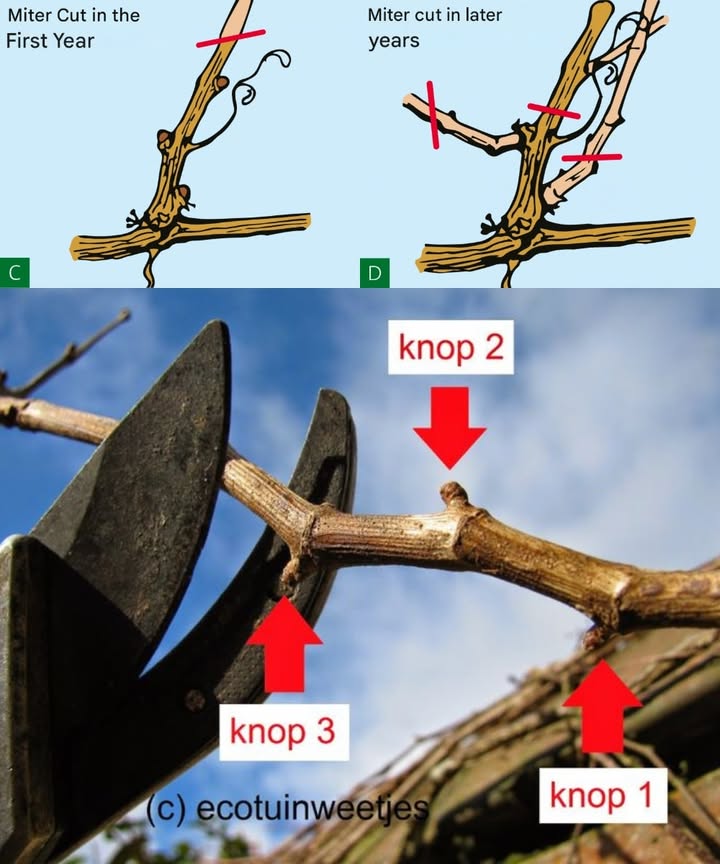
It means cutting back a cane to leave only 23 buds, known as spurs. These buds grow into fruitful shoots the following season. Unlike cane pruning 812 buds, spur pruning keeps growth compact and easier to manageperfect for small vineyards or espalier-trained vines.
How to perform spur pruning
1. Remove old, woody canes from the previous year close to the main trunk.
2. Select a healthy young cane and cut it back to 23 buds.
3. Make a clean, angled cut so rainwater can drain.
4. Keep about 1 cm of wood above the top budtoo close damages it, too far leaves dead wood.
Benefits
Stronger, more fertile shoots
Easier vine training and better airflow
Lower disease risk
More consistent harvests over the years
Mistakes to avoid
Leaving too many buds too many small grapes
Cutting right on the bud risk of drying out
Keeping weak old wood drains energy from the plant
Best timing
Winter December to February: main pruning for shaping
Summer June/July: thinning out side shoots for better fruit quality
In short, spur pruning is the foundation for healthy vines and bountiful harvests. With just a few precise cuts, youll guide the plants energy toward fruitful growth every year.

Hi there — I’m Ava, the creator behind Ava Garden Tips 🌿
I’ve always been passionate about plants, flowers, and the simple joy that comes from growing something beautiful. What started as a small balcony garden has turned into a love for helping others create their own green spaces — no matter how big or small.