
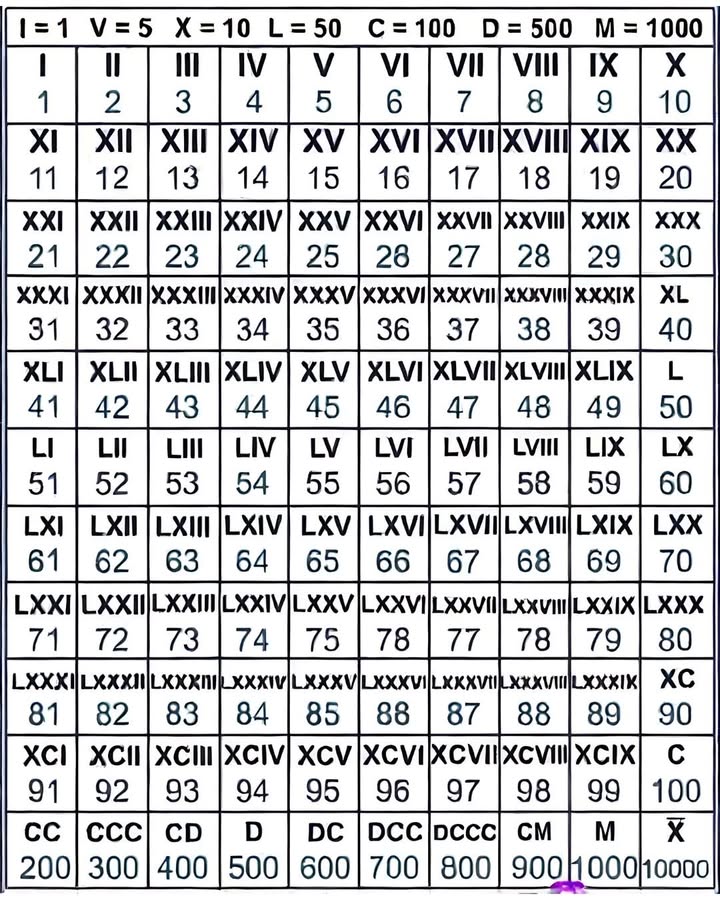
Roman Numerals Reference
1 Basic Values
I = 1, V = 5, X = 10, L = 50, C = 100, D = 500, M = 1000
2 Numbers 110
I, II, III, IV, V, VI, VII, VIII, IX, X
3 Numbers 1120
XI, XII, XIII, XIV, XV, XVI, XVII, XVIII, XIX, XX
4 Numbers 2140
XXI to XL, increasing by adding units to X and then moving toward L 50.
5 Numbers 4160
XLI to LX, with 50 represented as L and numbers built around it.
6 Numbers 6190
LXI to XC, combining L 50 with X multiples up to 90.
7 Numbers 91100
XCI to C, where C stands for 100.
8 Larger Values
200 = CC, 300 = CCC, 400 = CD, 500 = D, 600 = DC, 700 = DCC, 800 = DCCC, 900 = CM, 1000 = M
9 Extended Values
5000 and 10000 can be represented with special overlines or symbols, often written as V and X in historical notation.
Practical Use
Roman numerals are still applied in clocks, book chapters, film credits, monarch names, and Olympic games.

Hi there — I’m Ava, the creator behind Ava Garden Tips 🌿
I’ve always been passionate about plants, flowers, and the simple joy that comes from growing something beautiful. What started as a small balcony garden has turned into a love for helping others create their own green spaces — no matter how big or small.