
The Discovery of Photosynthesis
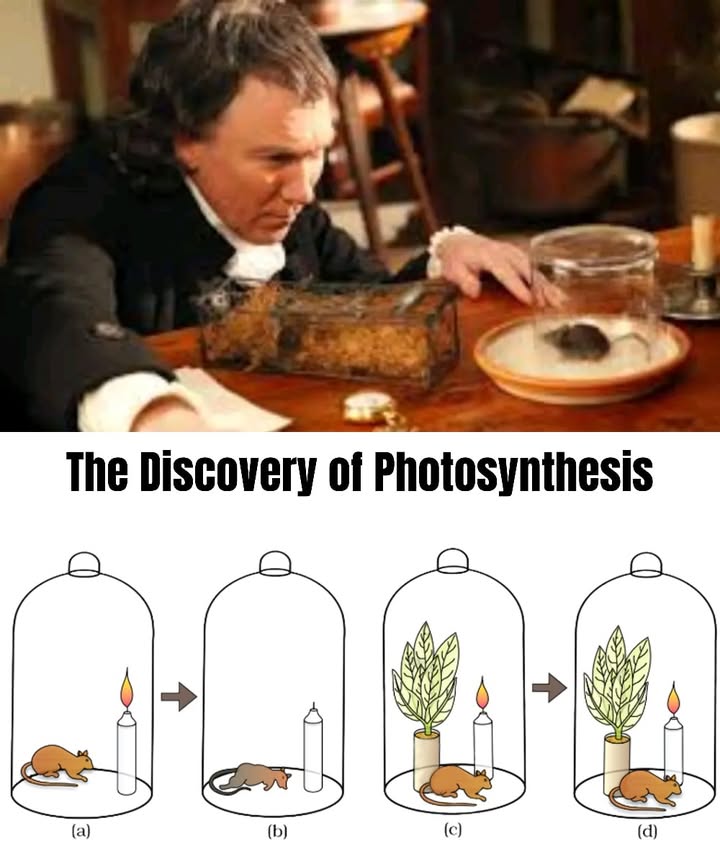
1 In 1774, Joseph Priestley, a theologian and scientist, carried out a curious experiment: he placed a burning candle and a mouse under a glass container. The candle went out quickly, and the mouse died due to lack of air.
2 Interested in the result, Priestley repeated the test but added a mint plant inside the container. To his surprise, the candle stayed lit longer, and the mouse survived.
3 He concluded that plants restored the spoiled air, which he called dephlogisticated air. In reality, he had just discovered oxygen O.
4 What he observed was photosynthesis, the process by which plants produce oxygen using light, water, and carbon dioxide.
5 In 1779, physician and scientist Jan Ingenhousz proved that sunlight was essential to this process. He showed clearly that plants create their own food and release oxygen only in the presence of light.
These findings were crucial in revealing that plants depend not only on water and soil but also on light to survive and sustain all life on Earth.

Hi there — I’m Ava, the creator behind Ava Garden Tips 🌿
I’ve always been passionate about plants, flowers, and the simple joy that comes from growing something beautiful. What started as a small balcony garden has turned into a love for helping others create their own green spaces — no matter how big or small.