
Vegetable Planting Calendar: Complete Garden Guide
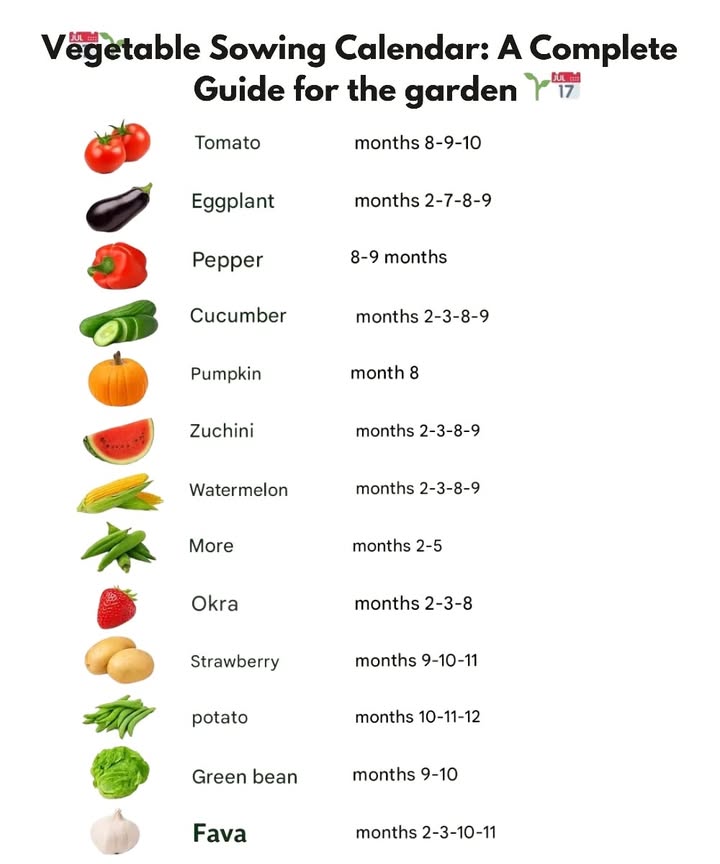
1 Tomato
Months: August, September, October
Loves sun and fertile soil. With mature compost, it produces juicy fruits. Common mistake: sowing too early in northern regions and losing seedlings to frost.
2 Eggplant
Months: February, July, August, September
Thrives in heat and well-drained soil. Pairs well with basil, which helps repel insects.
3 Pepper 𣏕
Months: August, September
Needs regular watering and nutrient-rich soil. Without steady warmth, yields remain low.
4 Cucumber 勒
Months: February, March, August, September
Best grown on vertical supports to keep fruits straight and clean.
5 Pumpkin
Month: August
Takes up a lot of space. Bonus: stores well for months after harvest.
6 Zucchini 勒
Months: February, March, August, September
Easy and very productive. Loves fertile soil and steady watering. Too much water = risk of rot.
7 Watermelon
Months: February, March, August, September
Needs consistent heat and sunshine. The hotter the climate, the sweeter the fruit.
8 Melon
Months: February, March, August, September
Benefits from mulch to retain warmth and moisture. Compost-rich soil gives better harvests.
9 Corn
Months: February, May
Traditionally grown with beans and squash Three Sisters. This keeps soil fertile and balanced.
Okra
Months: February, March, August
Not common in Europe, but valued in Mediterranean and African cuisines. Prefers hot climates.
11 Strawberry
Months: September, October, November
Likes cool, slightly acidic soil. Straw mulch keeps fruits clean and healthy.
12 Potato 凜
Months: October, November, December
Prefers sandy, light soil. Always hill up to protect tubers from sunlight.
13 Green Bean
Months: September, October
Fixes nitrogen in the soil. Perfect for crop rotation.
14 Fava Bean
Months: February, March, October, November
Hardy and cold-resistant. Great for spring and autumn planting.
General tips
Always adjust planting times to your local climate.
Use compost or well-rotted manure to feed the soil.
Rotate crops to maintain soil fertility.
Water regularly but avoid waterlogging.

Hi there — I’m Ava, the creator behind Ava Garden Tips 🌿
I’ve always been passionate about plants, flowers, and the simple joy that comes from growing something beautiful. What started as a small balcony garden has turned into a love for helping others create their own green spaces — no matter how big or small.