
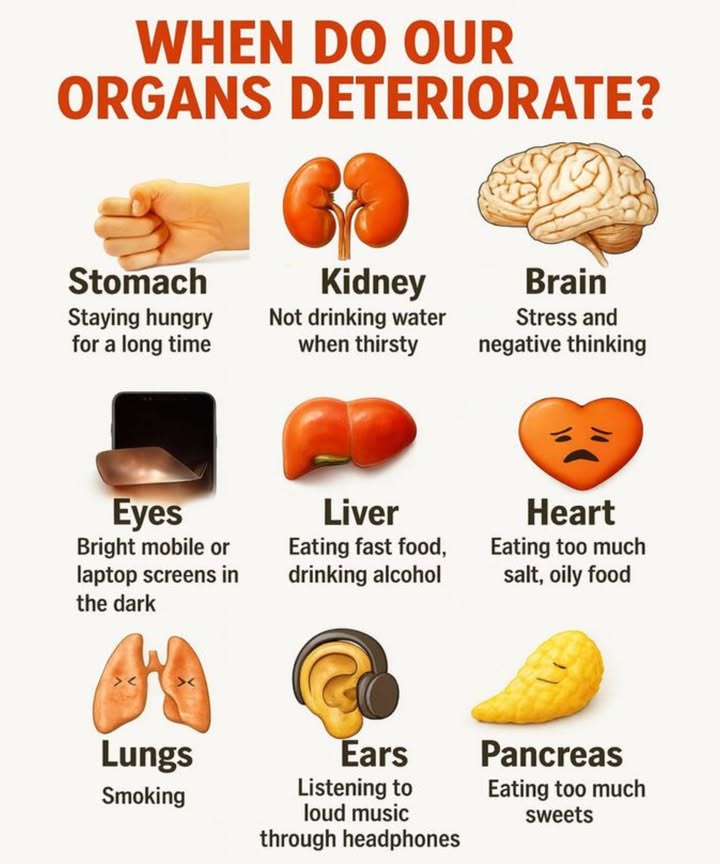
When Do Our Organs Deteriorate
1. Stomach Staying hungry for long periods
Skipping meals or going too long without eating can put unnecessary stress on your stomach. Make sure to fuel your body regularly to maintain proper digestion and overall health.
2. Kidneys Not drinking enough water when thirsty
The kidneys filter waste from the blood, and dehydration can make this process harder. Stay hydrated to keep your kidneys functioning well.
3. Brain Stress and negative thinking
Chronic stress and negative thoughts can shrink the brains volume and impair cognitive function. Practice mindfulness and stress-relieving activities like meditation or exercise.
4. Eyes Staring at bright screens in the dark
Prolonged exposure to blue light from mobile phones and laptops, especially in the dark, can strain your eyes. Avoid excessive screen time and take breaks to protect your vision.
5. Liver Eating fast food and drinking alcohol
Regular consumption of fast food and alcohol can overwhelm the liver, leading to serious long-term damage. Prioritize a balanced, nutritious diet to keep your liver healthy.
6. Heart Eating too much salt and oily food
A diet high in sodium and unhealthy fats can cause heart disease. Eating heart-healthy foods like fruits, vegetables, and whole grains can help protect this vital organ.
7. Lungs Smoking
Smoking damages the lungs, reducing their ability to breathe and filter toxins. If you smoke, consider quitting for better lung health and overall wellness.
8. Ears Listening to loud music through headphones
Prolonged exposure to loud sounds can cause permanent hearing damage. Lower the volume and give your ears a break to protect your hearing.
9. Pancreas Eating too many sweets
Consuming excessive sugar can lead to the overproduction of insulin, which can put strain on the pancreas. A balanced diet with minimal sugar is essential for this organs health.
Take care of your organs today to ensure a healthier tomorrow!

Hi there — I’m Ava, the creator behind Ava Garden Tips 🌿
I’ve always been passionate about plants, flowers, and the simple joy that comes from growing something beautiful. What started as a small balcony garden has turned into a love for helping others create their own green spaces — no matter how big or small.